Ceiling Water Damage in Plum Creek: Leak Repair Guide
A brown ring on your ceiling is never just cosmetic. By the time the stain shows up in your Plum Creek living room, water has already traveled across joists, soaked insulation, and started feeding mold spores inside the cavity. The drywall you see is the last domino, not the first.
At Plum Creek Water Restoration, we get calls from Plum Creek homeowners who noticed a small spot on Monday and watched it triple in size by Friday. Some catch it before the ceiling sags. Some call us after a chunk of plaster lands on the kitchen table at 2am. Either way, the playbook is the same: stop the water, dry the structure, test for contamination, then rebuild.
This guide is built as a fast checklist. If you are reading this with a bucket under a drip, skip to the numbered action list and call us. If we cannot help with your specific situation, we will tell you directly and point you to the right trade. Our crews are IICRC certified, BBB A+ rated, and have been serving Central Indiana since 2018, so we have seen every version of this problem from ice dams in February to upstairs toilet supply lines in July.
Quick Answer: What To Do Right Now
If your ceiling is actively leaking, dripping, or bulging in Plum Creek, take these steps in order before anything else:
- Shut off the water supply to the suspected source (toilet, sink, washer, or main).
- Place a bucket under the drip and puncture a sagging bulge with a screwdriver to release trapped water in a controlled stream.
- Move furniture, electronics, and rugs out of the drip zone.
- Turn off power to the affected room at the breaker if water is near fixtures or recessed lights.
- Photograph everything for your insurance claim before cleanup.
- Call a certified restoration team. Professional water damage restoration within 24 hours prevents most secondary damage.
The Professional Restoration Process
Step by-Step Scope
- Inspection and moisture mapping using thermal imaging and pin meters to find the full water footprint, not just the visible stain.
- Source repair coordination with a plumber or roofer if the leak is still active.
- Controlled demolition of saturated drywall, insulation, and any compromised framing.
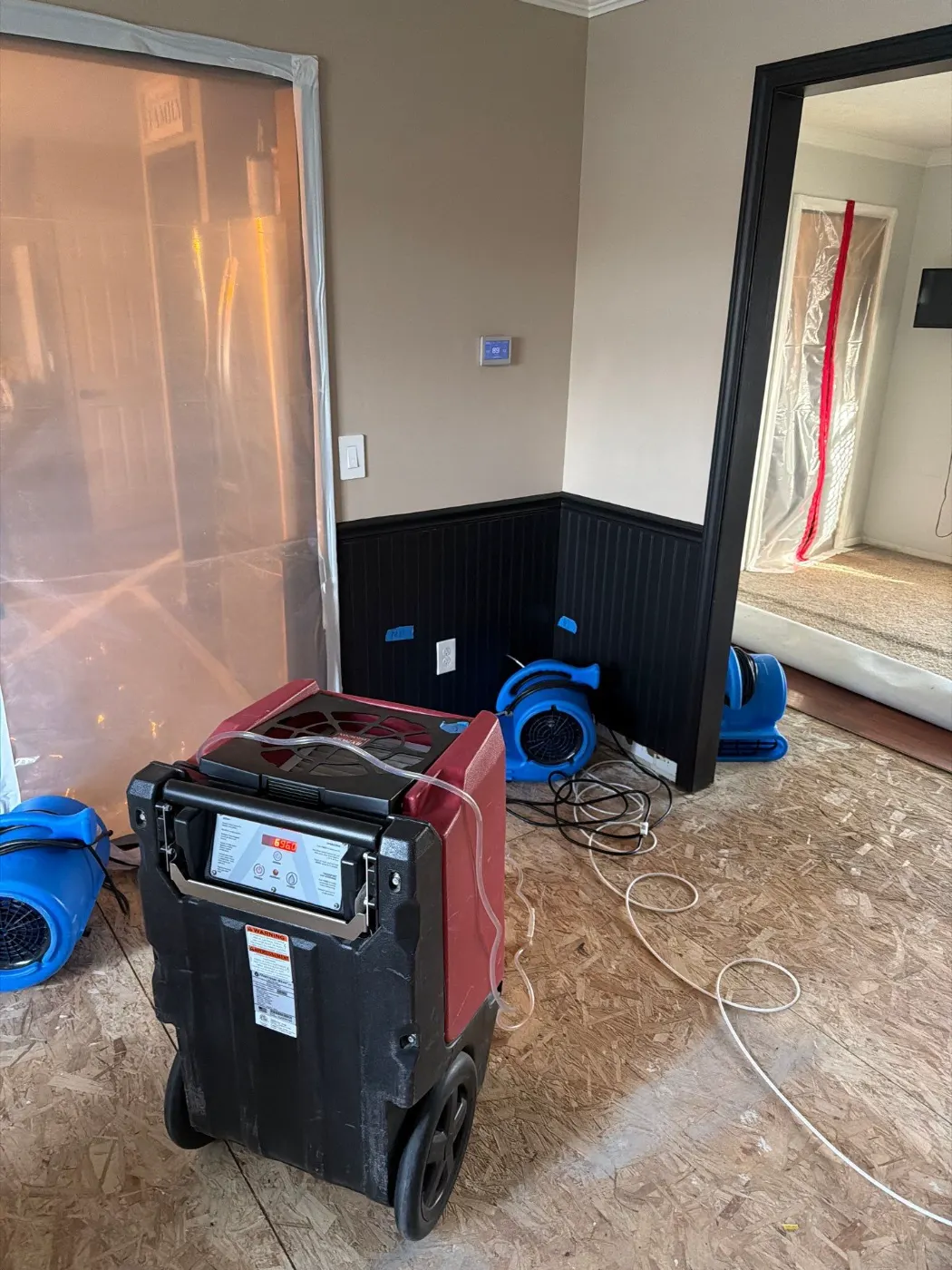
- Structural drying using air movers and LGR dehumidifiers, typically 3 to 5 days.
- Antimicrobial treatment on framing and surrounding cavities.
- Reconstruction including drywall, texture matching, primer, and paint.
IICRC Water Categories You Should Know
- Category 1: Clean water from supply lines. Lowest risk.
- Category 2: Gray water from dishwashers, showers, or aquariums. Moderate contamination.
- Category 3: Black water from sewage, toilet overflow, or flood. Highest risk, requires full PPE and removal of porous materials.
If your ceiling leak traces back to a toilet flange or sewer line, you are dealing with Category 3 contamination. That changes the scope significantly, and you can read more on our sewage cleanup service page for what proper containment looks like.
Why Texture Matching Matters
Most Plum Creek homes built after 1980 have either knockdown, orange peel, or popcorn ceiling textures. Matching these requires the right hopper gun, the right mud consistency, and a technician who has done it dozens of times. A patch that looks fine wet often dries with a visible halo or a different sheen. Plum Creek Water Restoration reconstruction crews keep texture samples on file for repeat customers and always prime the entire ceiling plane after a repair to avoid flashing under different light conditions.
When To Call Plum Creek Water Restoration
If the stain is bigger than a dinner plate, if you smell anything musty, or if the ceiling feels soft to a gentle touch, the damage has already moved past surface level. Calling early almost always costs less than waiting a weekend to see if it dries on its own. Plum Creek Water Restoration dispatches a moisture assessment team across Plum Creek day and night, and the inspection itself is the fastest way to know whether you are looking at a $400 cosmetic patch or a multi room rebuild.
Why Ceiling Damage Spreads Faster Than You Think
Gravity does the work. Water entering an attic or upper floor finds the lowest point, pools on top of drywall, then saturates outward along the path of least resistance. Insulation acts like a sponge, holding moisture against the ceiling for days after the leak stops. In Central Indiana, where summer humidity sits between 65 and 80 percent, that trapped moisture becomes a mold colony in 48 to 72 hours.
If your leak originated from a burst pipe upstairs, the situation escalates quickly. Our guide on burst pipe water damage and repair cost walks through the timeline in more detail, but the short version is this: every hour of standing moisture multiplies the restoration scope.
There is also a hidden weight problem. A standard 4 by 8 sheet of drywall weighs about 55 pounds dry. Saturated, it can carry an additional 20 to 30 pounds of water before it tears free from the fasteners. When a section of ceiling collapses, it rarely comes down in one clean piece. It pulls insulation, dust, fasteners, and sometimes a light fixture with it. That is why Plum Creek Water Restoration technicians prefer a controlled release through a small puncture rather than letting a bulge fail on its own schedule.
Insurance Claim Tips
- Document every stain, drip, and damaged item with timestamped photos.
- Save damaged materials in a contractor bag until the adjuster signs off.
- Get written scope from an IICRC certified restoration company before signing anything.
- Sudden and accidental discharges are typically covered. Long term seepage is not.
- Never let your insurer steer you to a preferred vendor without comparing.
- Ask your adjuster in writing whether matching adjacent rooms is covered when only part of an open concept ceiling is damaged.
- Keep a running log of every phone call, including names, claim numbers, and what was promised.
Realistic Cost Ranges in Plum Creek
| Damage Scope | Typical Cost Range | Insurance Likely? |
|---|---|---|
| Small stain, no structural damage | $300 to $700 | Usually no, under deductible |
| Single room ceiling replacement | $1,500 to $4,000 | Often yes if sudden |
| Multi room with framing repair | $4,500 to $12,000 | Yes, with documentation |
| Full Category 3 contamination | $8,000 to $25,000+ | Yes, sudden discharge |
Get the Ceiling Fixed Right the First Time
A ceiling leak in your Plum Creek home is one of those problems that gets exponentially more expensive the longer it sits. Catch it in the first day and you might be looking at a patch and a coat of paint. Wait a week and you are removing insulation, treating mold, and replacing fixtures. Plum Creek Water Restoration responds 24 7 across Central Indiana, documents every step for your insurance carrier, and tells you straight when a repair is simple enough to handle yourself. Call when you see the stain, not after the drywall hits the floor.
Identifying the Source of a Ceiling Leak
Ceiling water damage in Plum Creek homes almost always traces back to one of five sources. Knowing which one you are dealing with shapes both the repair scope and the insurance conversation.
Common Leak Sources by Location
| Ceiling Location | Most Likely Source | Urgency |
|---|---|---|
| Below a bathroom | Toilet wax ring, shower pan, supply line | High |
| Below a kitchen | Dishwasher, sink drain, fridge line | High |
| Below an attic | Roof leak, HVAC condensate, ice dam | Medium to High |
| Below a laundry room | Washer hose, drain standpipe | Critical |
| Random spot, no plumbing above | Roof penetration, flashing, vent stack | Medium |
Visual Signs Worth Documenting
- Yellow or brown rings expanding over hours
- Bubbling or blistering paint
- Sagging drywall or visible bow
- Cracked or separating seams along ceiling joints
- Musty odor with no visible stain (hidden moisture)
- Active drip, even intermittent
Quick Tests to Narrow the Source
Before you call a plumber, run a few simple tests. Dry the stain completely with a fan, mark its edges with a pencil, and check it after each water using activity upstairs. Run the shower for ten minutes with the drain closed, then open. Flush the toilet several times. Run a dishwasher cycle. If the stain only grows after a specific fixture is used, you have your culprit. If the stain grows after heavy rain or snowmelt, the issue is almost certainly on the roof or in flashing around a vent boot, chimney, or skylight.
Frequently Asked Questions
How quickly should I act on a ceiling leak in Plum Creek?
Within hours, not days. Mold can begin growing in 24 to 48 hours, and saturated drywall can collapse without warning. Plum Creek Water Restoration offers 24/7 emergency response across Plum Creek and surrounding Central Indiana communities.
Will my homeowners insurance cover ceiling water damage?
Sudden and accidental damage, such as a burst pipe or storm related roof leak, is typically covered. Gradual leaks from long term neglect usually are not. Plum Creek Water Restoration can document the damage and work directly with your adjuster to clarify coverage.
Can you dry the ceiling without cutting it open?
Sometimes, if the damage is caught early and the cavity above is accessible. We use injection drying systems and dehumidifiers when possible. Sagging or heavily saturated drywall usually has to be removed for proper drying and mold prevention.
How much does ceiling water damage repair cost in Plum Creek?
Most jobs fall between 500 and 3,000 dollars depending on the size of the affected area, whether framing is involved, and if mold treatment is required. Severe collapses or multi room damage can exceed that range.
What if I just paint over the stain?
If the leak is still active, the stain will return and the hidden damage will worsen. Always confirm the source is stopped and the area is fully dry before painting, and use a stain blocking primer to prevent bleed through.
Have a restoration question?
Our IICRC certified Plum Creek crew is ready to help. Free assessments, estimate based on what we can sees, no pressure.