Wet Drywall Repair in Plum Creek: Water Damage Restoration
Wet drywall is one of those problems that looks small for the first hour, then turns expensive the longer you wait. A ceiling stain. A soft baseboard. A wall that feels cool to the touch. By the time you push on it and your finger sinks in, the gypsum core is already breaking down and the paper facing is feeding mold spores. If you are standing in your Plum Creek home right now wondering whether to grab a fan or call a pro, you are in the right place.
At Plum Creek Water Restoration, we have been handling water damage across Central Indiana since 2018. We are BBB A+ rated, IICRC certified, and we run drying jobs on hundreds of Plum Creek properties every year. This guide walks through the specific problems wet drywall creates, and the exact solution we use for each one. No fluff, no scare tactics. If your situation does not need full demo, we will tell you. If it does, you will know why before we cut a single panel. Read through, then call us if the water is still moving or the walls are still wet.
Quick Answer: Repair, Dry, or Replace?
Drywall acts like a sponge. Once water reaches the gypsum core, the panel loses structural strength and becomes a mold risk if it stays damp longer than 48 hours. The decision tree is simple:
- Clean water (Category 1), under 24 hours: Often dry in place with air movers and dehumidifiers.
- Gray water (Category 2): Flood cuts usually required, insulation often removed.
- Black water (Category 3, sewage): Full removal of affected drywall, no exceptions.
- Visible swelling, sagging, or crumbling: Replace regardless of category.
IICRC Water Categories at a Glance
| Category | Source Example | Drywall Action |
|---|---|---|
| Cat 1 | Supply line, rainwater | Dry in place if caught fast |
| Cat 2 | Dishwasher, washing machine | Flood cut 12 to 24 inches |
| Cat 3 | Toilet overflow, sewer backup | Remove all wet drywall |
How Plum Creek Water Restoration Assesses Wet Drywall in Plum Creek Homes
When our techs arrive, the inspection follows a set order so nothing gets missed. We use penetrating and non penetrating moisture meters, thermal imaging, and a hygrometer to map the affected area.
- Identify the water source and stop it.
- Classify the water under IICRC S500 standards.
- Map moisture in drywall, baseboards, and behind walls.
- Check insulation, studs, and bottom plates.
- Document everything for your insurance claim.
If you suspect saturation you cannot see, our guide on water damage behind walls and hidden leak detection walks through the warning signs in plain language.
Signs Drywall Cannot Be Saved
- Soft to the touch or crumbles under finger pressure
- Visible mold growth (any color, fuzzy or slimy)
- Sagging seams or popped tape
- Moisture readings above 17 percent after 72 hours of drying
- Contact with Category 3 water at any depth
- Brown tannin staining that bleeds through fresh primer
- Delamination of paper face from the gypsum core
Why the 48 Hour Window Matters
Mold spores are already present in every Plum Creek home at low background levels. They need three things to activate: a food source (paper facing on drywall), moisture, and time. Within 24 to 48 hours of saturation, colonies begin forming inside wall cavities where airflow is poor and temperatures stay between 60 and 80 degrees. Once mold establishes, the scope shifts from water mitigation to remediation, which adds containment, HEPA filtration, and antimicrobial treatment to the bill. Acting fast is the single biggest cost saver.
Make the Call Before the Clock Beats You
Wet drywall does not wait. Every hour past the 24 hour mark shifts your decision from save to replace and your cost from hundreds to thousands. If you are in Plum Creek and unsure what category your water is or whether a wall can be dried, call Plum Creek Water Restoration. We will come out, measure, document, and give you a straight answer. If the wall can be saved we will say so. If it cannot, we will tell you directly and show you the readings that prove it.
Timeline: What to Expect Day by Day
- Day 0: Emergency call, extraction, equipment set
- Days 1 to 3: Active drying, daily monitoring
- Days 3 to 5: Drying complete, demo finalized if needed
- Days 5 to 10: Reconstruction scheduled
- Days 10 to 14: Paint, trim, final walkthrough
What You Can Do Before We Arrive
- Shut off the water at the main if the source is plumbing
- Turn off electricity to affected rooms at the breaker
- Move furniture and rugs away from wet walls
- Take photos of every damaged surface for your claim
- Do not punch holes in the drywall yourself, it complicates documentation
- Open windows only if outdoor humidity is lower than indoor, otherwise keep the house closed
- Pull back wet carpet edges to expose tack strips for faster subfloor drying
Preventing the Next Incident
After we button up the repair, a few small habits keep wet drywall from becoming a recurring problem in your Plum Creek home. Replace rubber washing machine hoses with braided stainless steel every five years. Install water sensors under sinks, behind toilets, and near the water heater. Check caulking around tubs and showers twice a year, since failed seals are one of the top causes of bathroom wall damage we see. If your home has a basement, confirm the sump pump runs every spring and consider a battery backup before storm season.
The Wet Drywall Repair Process Step by Step
Once the assessment is complete, the work falls into four phases. Each one has a clear endpoint so you can track progress.
Phase 1: Water Extraction and Containment
- Extract standing water with truck mounted or portable units
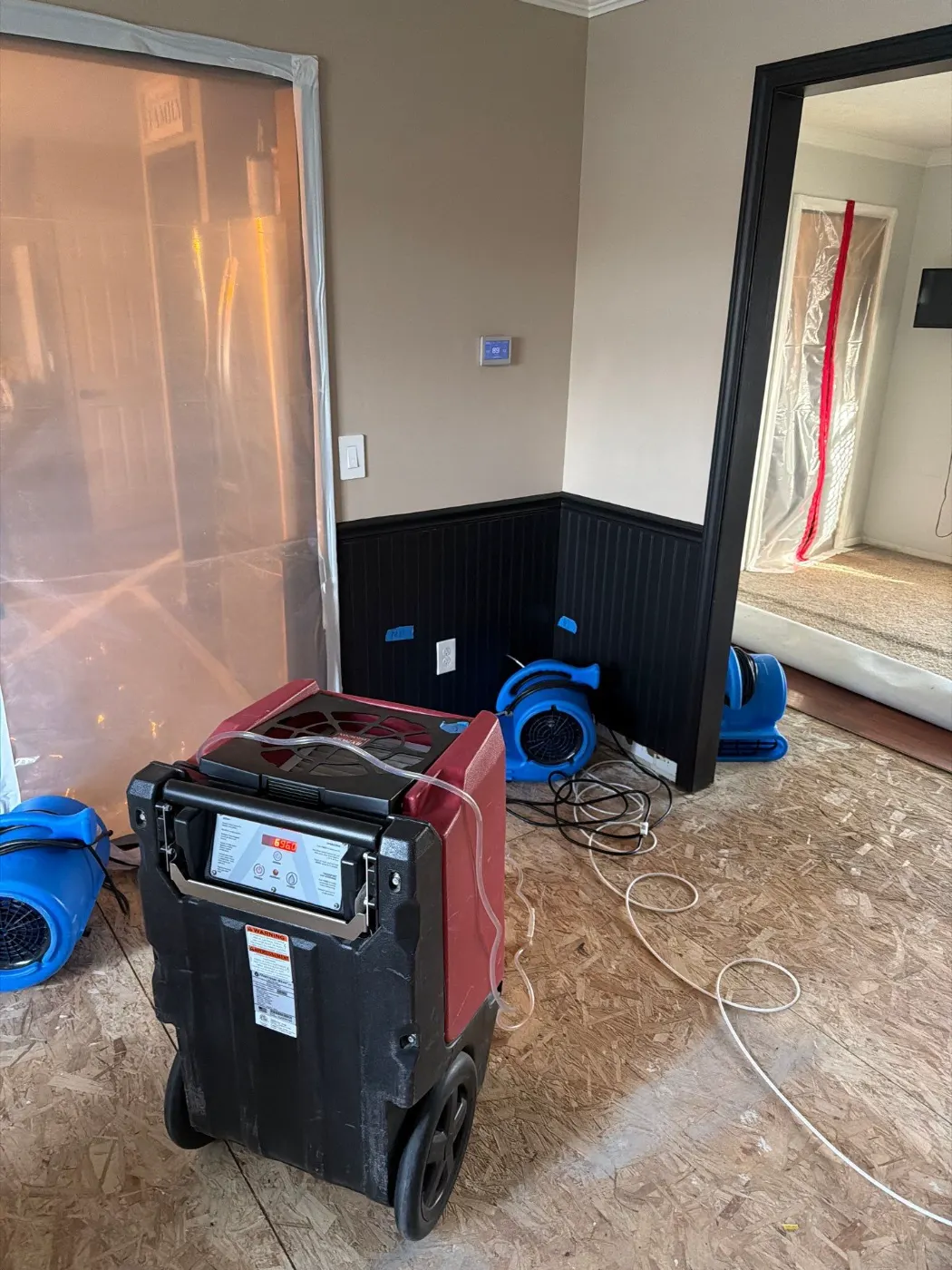
- Set up plastic containment to isolate the work area
- Establish negative air pressure if mold is suspected
- Protect unaffected flooring with rosin paper and corner guards
Phase 2: Controlled Demolition
- Flood cuts at 12, 24, or 48 inches depending on wicking
- Remove wet insulation in cavity
- Detach and label baseboards for reuse when possible
- Bag and haul debris (required for Cat 3 jobs)
Phase 3: Structural Drying
- Air movers placed every 10 to 16 linear feet
- Commercial dehumidifiers sized to the cubic footage
- Daily moisture readings logged for the adjuster
- Target: stud and plate moisture content under 15 percent
Phase 4: Reconstruction
- New insulation (R-value matched to original)
- New drywall, taped, mudded, sanded, primed
- Paint match to existing wall
- Trim and baseboard reinstallation
What Wet Drywall Repair Costs in Plum Creek
Pricing depends on square footage, water category, and whether reconstruction is included. Below are typical ranges we see across central Indiana jobs. Your exact quote depends on the inspection.
| Scope | Typical Range | Notes |
|---|---|---|
| Drying in place (small area) | $500 to $1,500 | No demo, 3 to 5 day equipment rental |
| Flood cut and dry (one room) | $1,800 to $4,200 | Cat 2 most common |
| Full room replacement | $3,500 to $8,000 | Includes reconstruction |
| Cat 3 sewage drywall removal | $4,000 to $12,000+ | See sewage cleanup |
Most homeowners insurance policies cover sudden and accidental water damage, including the drywall work. We document moisture readings, photos, and scope notes in a format adjusters accept. For a deeper look at pricing logic, our complete water damage restoration cost breakdown explains line items and deductibles.
Factors That Push a Quote Higher
- Two story wicking where water traveled down inside wall cavities
- Plaster over lath instead of modern drywall (common in older Plum Creek homes)
- Lead or asbestos testing required before demolition on pre-1980 builds
- Textured ceilings that require full skim coats to blend repairs
- Built in cabinetry or tile that must be removed and reset
Frequently Asked Questions
Can I just paint over water-stained drywall in my Plum Creek home?
Only after the drywall is verified dry below 16 percent moisture content and any mold has been addressed. Painting over wet or contaminated drywall traps the problem and almost always leads to bubbling, peeling, and hidden growth. Plum Creek Water Restoration verifies dryness with calibrated meters before any cosmetic work begins.
How soon should I call Plum Creek Water Restoration after I notice wet drywall?
Immediately, ideally within the first 24 hours. The IICRC mold growth window starts at 48 hours, and insurance carriers expect prompt mitigation. Plum Creek Water Restoration dispatches teams across Plum Creek 24/7, and earlier response almost always means less demolition and lower total cost.
Will you work directly with my insurance adjuster?
Yes. Plum Creek Water Restoration writes estimates in Xactimate, the same software most carriers use, and we communicate directly with adjusters in Plum Creek on documentation, scope, and supplements. You stay in control of the claim, but you do not have to translate restoration language alone.
What if the wet drywall is on my ceiling instead of a wall?
Ceiling drywall is more urgent because gravity, weight, and gypsum saturation can lead to collapse. If you see a bulge or sag, stay out of the room and call us. We address ceiling losses in detail in our guide on ceiling water damage and leak repair, and we handle them daily in Plum Creek.
Do you handle sewage-contaminated drywall differently?
Yes. Category 3 water requires full removal of affected drywall, insulation, and any porous materials, followed by antimicrobial treatment of the framing. Plum Creek Water Restoration follows IICRC S500 and S520 protocols on every Category 3 job in Plum Creek, and we document containment and air quality throughout.
Have a restoration question?
Our IICRC certified Plum Creek crew is ready to help. Free assessments, estimate based on what we can sees, no pressure.